
Transitioning Cat Diets: How to Change Food by Life Stage
Key Takeaways
- Most cats need at least two diet changes in their lifetime — kitten to adult, then adult to senior — and doing it gradually matters.
- A slow 7–10 day transition, gradually increasing new food while decreasing old, helps avoid digestive upset and food refusal.
- Transitioning kitten to adult food usually happens around 12 months, while the move to senior food depends on individual health and your vet's advice.
- If your cat refuses the new food or shows vomiting or diarrhoea, slow down, pause at the current ratio, and seek vet help if symptoms persist.
Most cat owners will need to change their cat's food at least twice in its lifetime: kitten to adult, and eventually adult to senior. Doing it right matters far more than most people assume. A slow, structured transition avoids digestive upset and food refusal, keeps mealtime a happy ritual, and lets your cat adjust at their own pace. Whether you are switching cat food between life stages or simply moving to a new formula, the same gentle principle applies — take it slow.
Here is how to handle every stage of transitioning kitten to adult food, so the bowl in front of your cat stays a source of comfort, not confusion.
How to Transition Any Cat to a New Food Safely
Sudden food changes are the most common cause of vomiting and diarrhoea in otherwise healthy cats. A cat's digestive system needs time to adjust to new ingredients, so the key is gradual change. The standard ratio method works by gradually increasing the new food while decreasing the old food over 7–10 days, giving your cat's stomach time to adapt without upset. The same gentle approach applies whether you are switching cat food brands or transitioning kitten to adult food — patience is the secret to a happy bowl.
If digestive symptoms appear along the way, do not push forward. Pause at the current ratio for a few extra days before continuing. Cats with sensitive stomachs, allergies, or a history of fussy eating may need longer than the standard schedule — and that is perfectly fine. The goal is a happy, comfortable cat, not a fast one, so let your cat's response guide the pace of every transition.
The 7–10 Day Transition Schedule
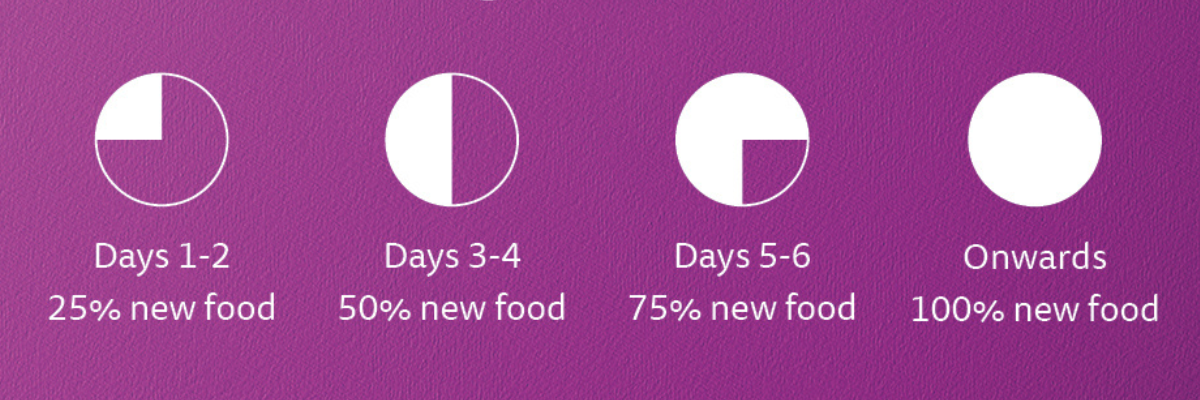
Note: If your cat shows vomiting or diarrhoea, hold at the current ratio for a few extra days before continuing. Sensitive cats may need a longer, gentler schedule.
Transitioning Your Kitten to Adult Food
The first major life-stage transition comes when kitten food stops being necessary. Most cats are ready to move to adult cat food around 12 months old, once growth has slowed and their appetite has steadied. Larger breeds may need to stay on kitten food a few months longer to support their slower development.
Timing matters both ways. Switching too early can under-support a still-developing cat, while staying on kitten food too long can contribute to excess weight gain, since kitten food is richer in calories.
Knowing when to stop feeding kitten food comes down to a few signs of readiness: slowing growth, a steadier appetite, and reaching the expected adult size. The process of transitioning kitten to adult food is gentle and gradual — follow the 7–10 day schedule above, and your growing cat will settle into their new bowl without a fuss.
For more on what to feed a growing cat, see our guide to your kitten's diet.
Transitioning Your Adult Cat to Senior Food
The second major transition — when to move a cat onto senior food — is less clear-cut than transitioning kitten to adult food. Most cats benefit from senior food from around 7–10 years old, though this varies by individual health. Unlike the kitten transition, the timing here is best confirmed with a vet, since individual health conditions play a much bigger role. If you are wondering how to transition to senior cat foods, the answer is rarely a single age — it is a conversation shaped by your cat's body and your vet's guidance.
Senior food differs from adult formulas in important ways: adjusted calorie density, added joint and kidney support, and easier-to-digest ingredients. Signs to watch for include weight changes, reduced activity, or the vet flagging early-stage health concerns at a check-up. And if you find yourself asking when should I switch to senior cat foods, trust the signals your cat is giving you alongside your vet's advice — not a date on the calendar. Our guide to
For more support, see our guide to feeding your senior cat and what to do if your older cat isn't eating.
Choosing the Right Food at Each Stage
Once you have decided it is time to transition, the next question is what to look for. Food should be formulated and labelled for the stage being transitioned into — kitten, adult, or senior. The same care you take when transitioning kitten to adult food applies here: match the formula to the life stage first, then to your cat as an individual. Beyond the life-stage label, match the formula to your cat's health needs: weight, dental, or digestive considerations can all inform the specific choice, not just the age itself.
Wet, dry, or a mix? Either can suit a life-stage diet. The right format depends more on hydration needs and your cat's preference than on age. The best food is one your cat will actually eat — happily and consistently.
Handling Fussy Eaters and Digestive Upset During Transition
Two problems crop up most often during a transition: a cat refusing the new food, and digestive symptoms. Both are manageable with a little patience.
- Brief disinterest is common and normal; ongoing refusal or not eating for 24+ hours needs attention.
- Make new food more appealing by warming it slightly, mixing with a small amount of wet food, or trying a different format.
- Any vomiting or diarrhoea means holding at the current ratio rather than pushing forward.
- Prolonged appetite loss — especially in senior cats — can signal an underlying health issue rather than simple fussiness, and warrants a vet visit.
For tips on encouraging a reluctant eater, see how to get your cat to eat.
Ready to make the switch?
Whether you are moving from kitten to adult or adult to senior, take it slow, keep it positive, and let your cat lead the way. Explore the full WHISKAS® cat food range or browse more of our cat care and health articles to keep your cat happy and healthy through every life stage.
Frequently Asked Questions
It is possible to transition a little faster for some cats, but going quicker than 7–10 days increases the risk of digestive upset and food refusal. If your cat has a sensitive stomach, a longer schedule is safer. The goal is a comfortable cat, not a fast transition — so let your cat's response set the pace.
You can switch brands, but a gradual transition becomes even more important. Different brands use different ingredients and formulas, so your cat's digestive system needs time to adjust. Follow the same 7–10 day ratio method, and slow down if you notice any digestive changes.
Yes, mild changes in stool consistency can be normal as your cat's gut adjusts to new ingredients. However, if you see persistent diarrhoea, blood, or your cat seems uncomfortable, pause the transition and consult your vet. Slight softening for a day or two is common; ongoing issues are not.
Not necessarily. Each cat should transition according to their own needs and life stage. In a multi-cat home, it can help to feed cats separately so you can control portions and monitor who is eating what. Transitioning one cat while another stays on their current food is perfectly fine. And if mealtimes are getting complicated, WHISKAS® Multi-Cat is a complete and balanced recipe for cats of all ages.
Life stage is generally guided by age, but individual health and breed matter too. Kittens are usually under 12 months, adults from around 1–7 years, and seniors from around 7–10 years onward. If you are unsure — especially for an adopted cat of unknown age — your vet can help estimate their stage and the right food to match.