
Matted Cat Fur: What Causes It and How to Manage It
Key Takeaways
- Matted fur forms when loose undercoat fur, natural oils, or debris clump together — most often around the belly, armpits, behind the ears and under the collar.
- A mat and a pelt aren't the same thing: early mats can often be teased apart at home, but a pelt usually needs a professional.
- Using the right cat brush for shedding — matched to your cat's specific coat type — is the single most effective way to prevent matting before it starts.
- Never use scissors alone on a mat; cat skin is thin and tears easily. When in doubt, always call a groomer or vet.
What Causes Matted Fur in Cats?
There's a particular look a cat gives when something's not quite right with their coat — a twitch, a flick of the paw, a quiet demand for attention. Matted fur is one of the most common reasons behind it. When loose fur tangles and clumps together, it pulls on delicate skin and turns a once-silky coat into something distinctly uncomfortable.
Thankfully, most matting is preventable with the right routine and the right cat brush for shedding. Let's walk through what causes mats, how to manage them safely at home, and when it's time to call in the professionals.
Shedding and Undercoat Buildup
Cats shed continuously, and many breeds carry a dense undercoat beneath their glossy top layer. When that loose undercoat fur isn't brushed out regularly, it becomes trapped under the top coat, tangling and compressing until it forms the earliest stage of a mat. This is especially common during seasonal shedding bursts in spring and autumn, when the volume of loose fur can overwhelm a cat's own grooming efforts. A dedicated cat brush for shedding lifts that loose undercoat fur away before it has the chance to knot.
Under-Grooming
Cats are fastidious groomers by nature, but not every cat can keep up. Overweight, senior, or arthritic cats often can't reach and groom certain areas as effectively as they once did — particularly along the lower back, base of the tail, and hindquarters. When self-grooming slows down, mats form quickly in the spots a cat simply can't get to. If your cat is grooming less, it's worth a gentle conversation with your vet, as reduced grooming can sometimes signal an underlying health or mobility issue.
Dirt, Oils, and Moisture
A build-up of natural skin oils, debris, or humidity can cause fur to clump together more easily. Cats that explore outdoors, roll in dust, or get caught in the rain are more prone to sticky, clumped fur that mats faster than clean, dry coat. Even indoor cats can develop oil buildup over time, particularly along the chin and back. Regular brushing with a quality cat brush for shedding helps distribute oils evenly and removes the debris that acts as a magnet for tangles.
Common Trouble Spots
Matting tends to form first around the belly, armpits, behind the ears, and around the collar — the areas that see the most friction and movement. Every time your cat walks, stretches, or rubs against a favourite chair, these high-friction zones shift and press fur together. Knowing where to check first means you can catch early tangles before they tighten into something more stubborn.
Matting vs. Pelting: Understanding the Difference
Most owners aren't aware that a mat and a pelt are not the same thing — and knowing which one you're dealing with changes what's safe to do at home.
A Mat
A mat is a section of tangled, knotted fur that can often still be combed or gently teased apart with care. Early-stage mats feel like small, dense clumps that haven't yet tightened fully against the skin. With patience and the right technique, many mats can be worked loose at home.
A Pelt
A pelt is what happens when mats multiply and fuse together into a single, solid sheet of matted fur that sits flat and tight against the skin. Pelts are thick, hard, and often impossible to separate without clipping. They can restrict movement, trap moisture and bacteria against the skin, and cause real discomfort. A pelt is almost always a job for a professional groomer or vet — attempting to cut one off at home carries a high risk of injuring your cat.
Choosing the Right Cat Brush to Prevent Matting
Using the right tool for a cat's specific coat type is the single most effective way to prevent matting from forming in the first place. There are several types of cat brushes, and the best brush for cats depends on coat length, density, and your cat's tolerance for grooming.
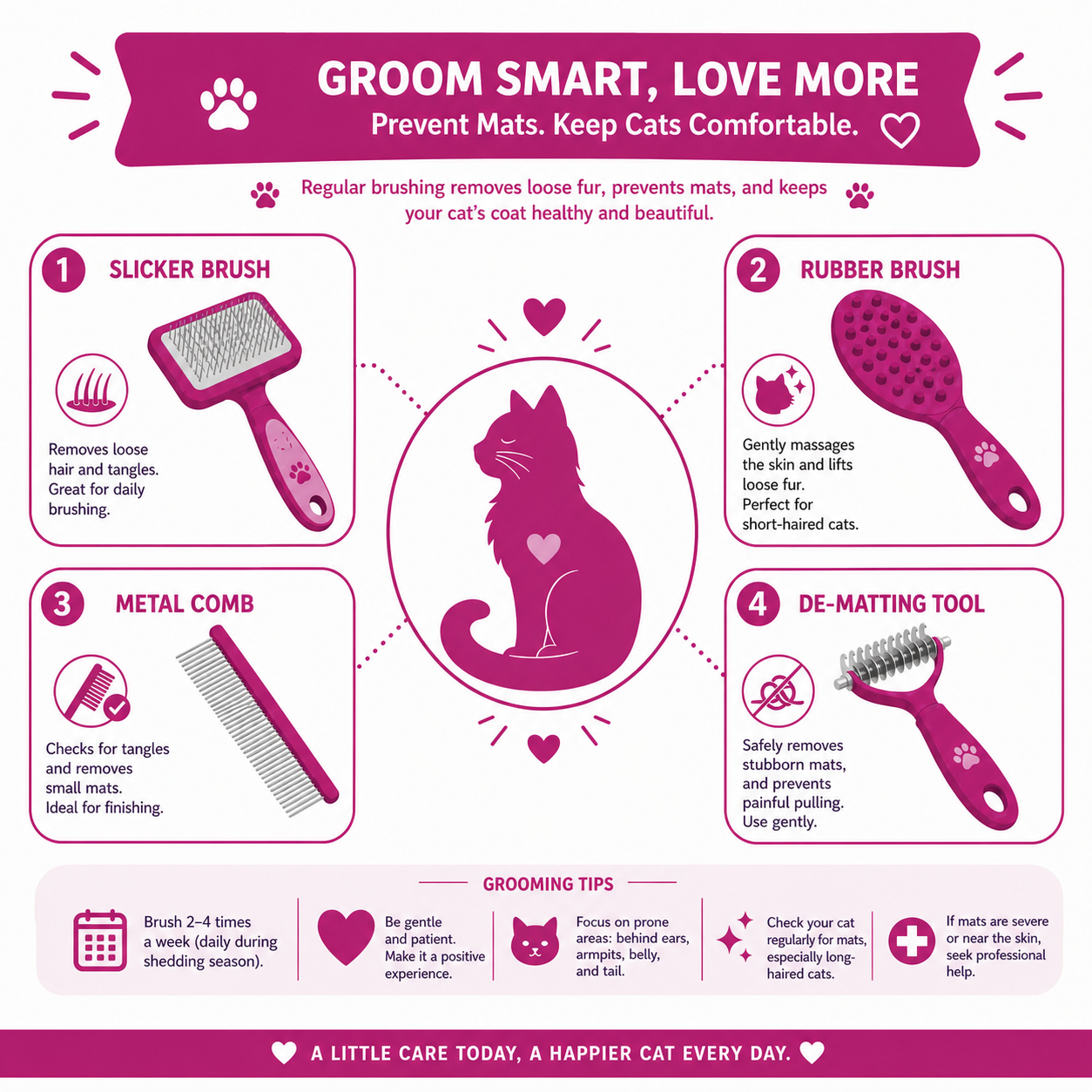
Slicker Brushes
Well suited to medium and long-haired cats, a slicker brush features fine, angled wire bristles that work through the undercoat and catch loose fur before it has the chance to tangle. If you're looking for a cat brush for long hair, a slicker is often the go-to. Use gentle, sweeping strokes in the direction of fur growth, and let the bristles do the work rather than pressing hard against the skin.
Rubber Brushes
Gentle on the skin and often well tolerated by cats, a rubber cat brush is useful for short-haired breeds or as a comfortable first step for cats new to brushing. Rubber brushes grab loose surface fur and massage the skin at the same time, which many cats find genuinely relaxing. They won't reach deep into a dense undercoat, but they're a purrrrfect everyday tool for cats with shorter, finer coats.
Metal Combs
Fine-toothed metal combs are effective for checking problem areas like the belly and behind the ears, and can double as a safety guide when trimming a small mat. A comb lets you feel where a tangle begins and ends, and it's the best tool for confirming that a mat has been fully removed after brushing.
De-Matting Tools
Designed with rounded, blade-style teeth, de-matting tools can cut through the early stages of a mat without the injury risk of scissors. Among the best grooming tools for long haired cats, a de-matting comb works by slicing through tangles as you pull gently through the coat. Always use light pressure and work in small sections — these tools are effective but require a calm, steady hand.
Cat Brush Comparison at a Glance
| Brush Type | Best For | Coat Length | Key Benefit |
| Slicker brush | Removing loose undercoat fur | Medium to long | Catches fur before it tangles |
| Rubber brush | Gentle everyday grooming | Short to medium | Massage + surface fur removal |
| Metal comb | Checking trouble spots | All lengths | Confirms mats are fully gone |
| De-matting tool | Early-stage tangles | Long / dense | Slices through mats safely |
How to Safely Remove a Minor Mat at Home
For a small, early-stage mat, practical, safety-first guidance can make all the difference — while being clear about the limits of what should be attempted without professional help. Always start with a calm cat, good light, and plenty of patience.
Working From the Root
Hold the base of the mat gently between your fingers to anchor it away from the skin, then tease the tangle apart from the outer edges using your fingers or the tip of a metal comb. Working from the root outward reduces pulling on the skin and keeps your cat comfortable. Never yank or pull hard — if your cat flinches or vocalises, stop and reassess.
Using a Comb as a Barrier
If cutting becomes necessary, slide a metal comb between the mat and the skin so the comb sits as a protective barrier. Carefully snip only the fur above the comb's teeth, never below it. This simple technique protects against accidental cuts and gives you a clear visual of where the skin sits.
Never Use Scissors Alone or Shave Close to the Skin
Cat skin is remarkably thin and can be injured easily, even by an owner being careful. Scissors used without a barrier can slip beneath a mat and cut the skin in a single motion. If a mat is too tight for a comb barrier, don't risk it — that's your signal to hand it over to a professional.
Keeping Sessions Short
Stopping before a cat becomes stressed or agitated makes future grooming sessions easier, even if it means finishing a mat over several short sessions. Five to ten minutes of gentle, positive grooming with the right cat brush for shedding is far more productive than a long session that ends with a wary cat and a half-finished mat.
Pair brushing with treats and praise, and your cat will soon associate grooming with good things.
When Matting Needs Professional or Veterinary Help
It's important to be clear about when a mat has moved beyond safe home management, since attempting to handle severe matting or a pelt without professional support can genuinely harm your cat.
Seek professional help if you notice any of the following:
- The mat has fused into a solid, flat pelt close to the skin.
- The skin beneath the mat looks red, inflamed, or smells unusual.
- Your cat cries, growls, or resists aggressively when the area is touched.
- You can see or feel sores, scabs, or raw patches beneath the fur.
- Your cat is overweight, elderly, or arthritic and the mats are in hard-to-reach areas.
A professional groomer can safely clip severe matting, often using electric clippers that glide above the skin rather than scissors against it. If matting is accompanied by skin irritation or signs of pain, your vet should examine the area first to rule out infection or underlying conditions. For cats that find grooming genuinely stressful, a groomer experienced with cats can sometimes offer a sedated groom under veterinary supervision.
Preventing Matting Long-Term
The bigger-picture routine that keeps matting from becoming a recurring issue ties brushing frequency and coat health together. Prevention is always gentler — and far less stressful for your cat — than removal.
Consistency Over Intensity
A few minutes of daily brushing for long-haired cats prevents far more matting than an occasional deep grooming session. Building a quick brush into your evening routine, with the right cat brush for shedding, keeps loose fur moving out before it has the chance to clump. For short-haired cats, two to three sessions a week is usually enough.
Checking Problem Areas Regularly
Make a habit of checking the belly, armpits, and behind the ears — these are the spots where tangles begin. Running your fingers through these areas while your cat is relaxed on your lap is a simple, effective way to catch early mats before they progress.
Coat Health and Diet
A diet that supports healthy skin and coat can make fur more manageable and less prone to clumping. Essential fatty acids, including omega-3 and omega-6, play a key role in skin barrier function and coat condition. Feeding a complete and balanced cat food like WHISKAS® wet and dry ranges helps nourish the skin from within, so fur stays supple and less likely to mat.
Building a Professional Groomer Into the Routine
For high-maintenance coats, a professional groom every six to eight weeks alongside home brushing keeps mats from building up between sessions. A groomer can reach areas your cat won't tolerate at home and thin out dense undercoat that's prone to tangling. Regular professional care also means any skin issues are spotted early, before they become a bigger problem.
A Coat Worth Caring For
Caring for your cat's coat is one of the simplest ways to show love — and a well-groomed cat is a comfortable, content cat. Whether you're just starting out with a gentle rubber brush or refining a long-haired routine, the right approach keeps matting at bay and keeps purrrs coming. Read more about creating a grooming routine for your cat in our guide, then explore our tips on keeping their coat in good condition.
Frequently Asked Questions
Yes, it can — especially for long-haired or dense-coated breeds. Without consistent home brushing between grooms, loose fur accumulates quickly and mats can reappear within a couple of weeks. Pairing a professional groom every six to eight weeks with a few minutes of daily brushing at home is the most reliable way to keep matting from returning.
Long-haired and double-coated breeds such as Persians, Maine Coons, Ragdolls, and domestic long-hairs are significantly more prone to matting than short-haired breeds. Their dense undercoats shed continuously, and without regular brushing, that loose fur tangles fast. Short-haired cats can still mat, but it's far less common.
Matting is mainly an adult and senior cat issue. Kittens are typically agile, energetic groomers with softer, less dense coats. As cats age, mobility decreases and grooming becomes harder, which is why seniors and overweight cats are most at risk. If a young kitten develops mats, it's worth a vet check to rule out an underlying health issue.
A bath can sometimes help loosen mild, surface-level tangles by softening oils and debris — but never bathe a cat with significant matting. Water can make existing mats tighten further and trap moisture against the skin. If mats are present, always brush them out first, then bathe. For cats that dislike water, a damp cloth or pet-safe grooming wipes are a gentler alternative.
Yes, it can. Cats are remarkably stoic and often mask discomfort. Even without an obvious reaction, a tight matt pulls continuously on the delicate skin beneath it, which can cause low-grade soreness, restricted movement, and in severe cases, skin tearing or infection. Don't assume silence means comfort — if you can feel a matt, it's worth addressing.