
Understanding Changes in Your Cat's Behaviour
Key Takeaways
- Cats communicate constantly through behaviour — understanding common patterns like extensive sleeping, following, and curling up on you helps distinguish normal feline habits from a genuine change worth watching.
- Most adult cats sleep 13-18 hours a day in a cycle of light dozing and deep sleep, which is completely natural and tied to their evolutionary hunting instincts.
- When your cat sleeps on you or follows you everywhere, it's one of the clearest signs of trust, attachment, and social bonding a cat can show.
- While individual quirks are normal, a sustained or sudden shift across multiple behaviours — sleeping much more or less, hiding, or withdrawing — can be an early sign of an underlying health issue.
Cats communicate constantly through behaviour, and understanding common patterns — like extensive sleeping, following an owner around, or curling up on them — helps distinguish normal feline habits from a genuine change worth watching. If you've found yourself wondering why do cats sleep so much, or why your cat suddenly insists on shadowing your every move, you're asking exactly the right questions. This guide covers:
- Why cats sleep so much
- Why your cat sleeps on you
- Why your cat follows you everywhere
- How cats communicate day to day
- When a behaviour change might signal a health issue
Why Do Cats Sleep So Much?
Cats are nature's champion sleepers. Most adult cats sleep 13-18 hours a day, and kittens and senior cats can sleep even longer — up to 20 hours. If you're asking why do cats sleep so much, the answer is rooted in millions of years of evolution. As ambush predators, cats evolved to conserve energy between intense bursts of hunting activity. Even though your pampered house cat doesn't need to hunt for dinner, that hardwired instinct to sleep and conserve remains.
A cat's sleep isn't one long, deep snooze — it cycles between two main phases:
- Light dozing: The majority of a cat's sleep is light, easily disrupted rest. Your cat may look asleep but their ears swivel toward sounds and they're ready to spring up in an instant. This is the classic 'cat nap' — alert rest rather than deep unconsciousness.
- Deep sleep (REM): Cats experience short bursts of deep, REM sleep — typically 15-30 minutes at a time — where they may twitch, paddle their paws, or even dream. Deep sleep is essential for physical recovery, immune function, and processing experiences.
So if your cat seems to spend most of the day dozing, don't worry — this is cat behaviour explained at its most fundamental. The amount they sleep can also vary with age, season, and activity level, with cats often sleeping more during colder weather or shorter winter days. When you understand why do cats sleep so much, you can relax knowing that long hours of rest are simply part of healthy cats behaviour.
Why Does My Cat Sleep on Me?
There's something deeply special about a cat choosing to sleep on you. It's one of the clearest signs of trust and attachment a cat can show. When a cat sleeps on you, they're at their most vulnerable — and choosing to be there anyway tells you everything you need to know about how safe they feel in your presence.
Here's what's really behind this behaviour:
- Warmth: Cats love warmth, and the human body is an excellent heat source. Your cat may simply be seeking out the cosiest spot in the house — you.
- Security: Deep sleep is risky for a prey animal. Choosing to sleep on you means your cat trusts you to keep watch while they let their guard down.
- Scent bonding: Cats have a strong sense of smell, and sleeping on you lets them surround themselves with your familiar, comforting scent — reinforcing the bond between you.
- Affection: Yes, it's love. Cats show affection differently from dogs, but choosing to sleep on or near you is a genuine expression of attachment.
If you've wondered why does my cat sleep on me specifically — rather than a cosy blanket or a sunny windowsill — it's because you offer something no cushion can: warmth, safety, and the scent of someone they love. This kind of cat behaviour is a compliment of the highest order.
Why Does My Cat Follow Me Everywhere?
If your cat shadows you from room to room — following you to the kitchen, the bathroom, and back again — you're not alone. Why your cat follows you everywhere is a mix of instinct, attachment, and good old-fashioned curiosity.
Common reasons include:
- Attachment and bonding: Cats form strong bonds with their people, and following you is a way of staying close to someone they trust and enjoy being around.
- Routine and anticipation: Cats are creatures of habit. If you usually feed them when you walk to the kitchen, they'll follow you there — they've learned the pattern.
- Curiosity: Cats are naturally curious creatures. They want to know what you're doing, where you're going, and whether anything interesting (or edible) is happening.
- Separation anxiety: In some cases, excessive following can signal anxiety. If your cat becomes distressed when you leave a room or the house, it's worth discussing with your vet.
Most of the time, a following cat is simply a happy cat who enjoys your company. It's a beautiful expression of cat behaviour — your cat has chosen you as their favourite person, and they want to be wherever you are.
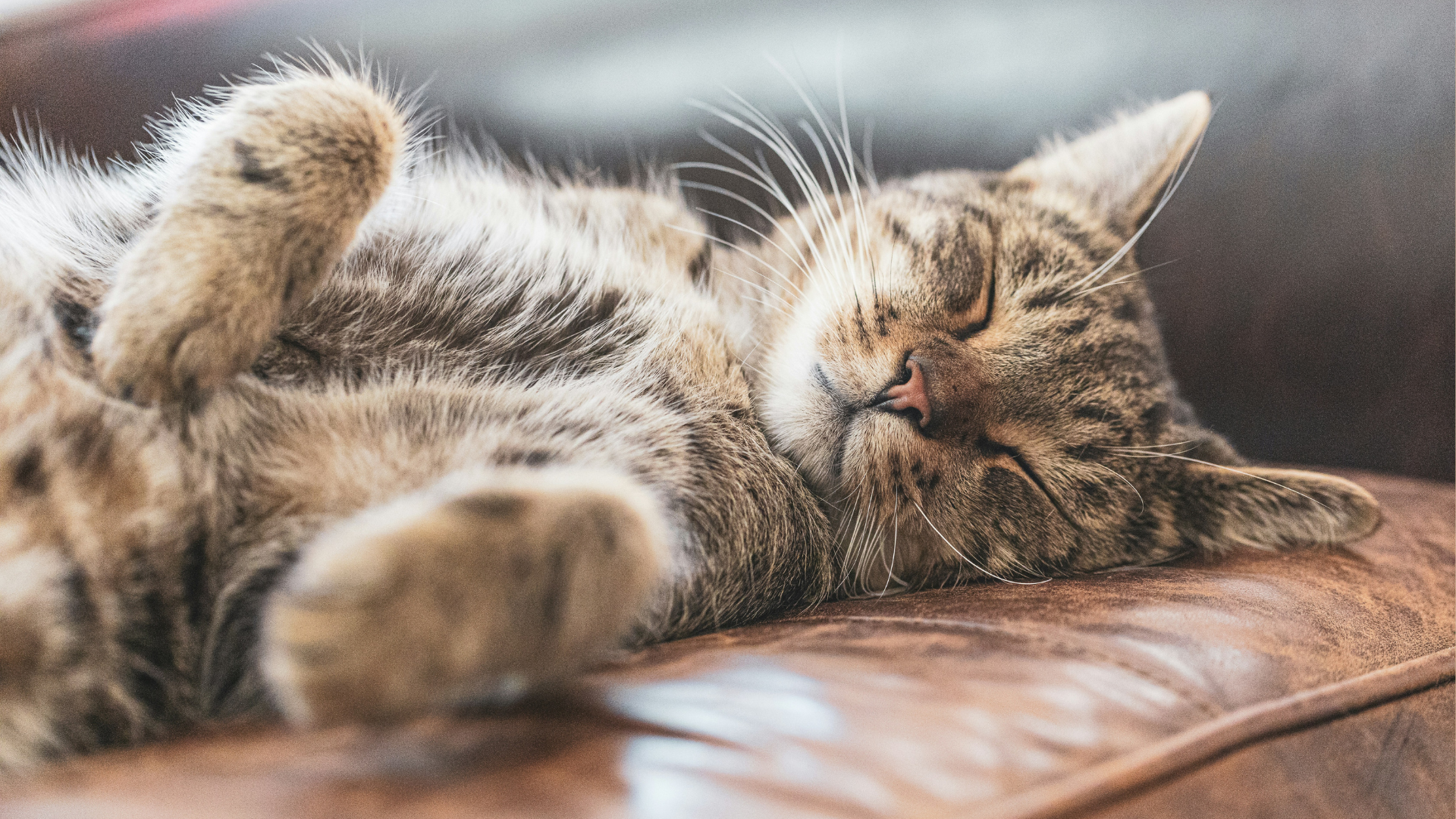
Image by Elisa Kennemer on Unsplash
How Cats Communicate Day to Day
Zoom out to the broader picture of feline communication, and you'll find that sleeping habits and following behaviour are just two examples of the many ways cats express themselves. Understanding cat behaviour means learning to read the full vocabulary — body language, vocalisation, and everyday habits.
Key ways cats communicate include:
- Body language: A relaxed cat with soft eyes and a gently swishing tail is content. A puffed-up tail, flattened ears, or dilated pupils signal fear or agitation.
- Vocalisation: Meowing is almost exclusively directed at humans — cats rarely meow at each other as adults. Purring usually signals contentment, while yowling or hissing signals distress.
- Scent marking: Cats rub their cheeks, forehead, and body against people and objects to deposit pheromones — it's their way of claiming you as part of their world.
- Kneading: When your cat rhythmically pushes their paws in and out against you or a blanket, they're showing contentment and recreating a comforting kittenhood behaviour.
- Slow blinking: A slow blink from your cat is a feline 'I love you.' Return the gesture and you're speaking their language.
Each of these behaviours is part of a rich, nuanced communication system. Explore more in our guide to understanding common cat habits.
When a Behaviour Change Might Signal a Health Issue
Here's the important safety point: while individual quirks are normal, a sustained or sudden shift across multiple behaviours can be an early sign of an underlying health issue. Cats are masters at hiding discomfort — by the time a behaviour change is obvious, something may have been brewing for a while.
Watch for these changes that warrant a vet visit:
- Sleeping much more or much less than usual, especially if the change is sudden.
- Hiding more often, withdrawing from interaction, or avoiding spaces they once enjoyed.
- Changes in appetite — eating significantly more or less, or showing new food preferences.
- Increased vocalisation, especially at night, which can signal pain or cognitive changes in older cats.
- Litter box changes — accidents outside the box, straining, or changes in frequency.
- Sudden clinginess or, conversely, a previously affectionate cat becoming distant.
None of these changes on their own necessarily mean something is wrong — cats are individuals, and behaviour naturally shifts with age and circumstance. But a pattern of change, especially one that persists for more than a few days, is always worth a conversation with your vet. Early detection makes a real difference.
Behaviour changes aren't always about sleep or movement — grooming can shift too. If your cat has started licking excessively, scratching more than usual, or showing coat changes, our guide to why your cat is grooming itself in a strange way can help you tell the difference between a passing habit and something worth watching.
Understanding Your Cat, Every Step of the Way
Every cat has their own rhythm — the way they sleep, follow, and communicate is part of what makes them uniquely, purrrrfectly theirs. Understanding what's normal for your cat helps you notice when something changes, and that awareness is one of the greatest gifts you can give them.
For more insights into your cat's world, explore our guides on cat behaviour explained, kneading and other behaviours, and understanding your cat. And if you're sharing your home with a little one, learn more about kitten behaviours and ways of communicating to understand them right from the start.
Frequently Asked Questions
Yes, many cats sleep more during colder months and shorter winter days, much like humans feel sleepier in winter. This is a natural response to reduced daylight and lower temperatures. Cats may also sleep more on rainy or overcast days. As long as your cat's appetite, energy, and behaviour are otherwise normal, seasonal increases in sleep are nothing to worry about.
Yes, this is perfectly normal. Cats may rotate between family members based on who's most available, who's warmest, or simply who they feel most bonded to on a given night. Some cats also prefer different people for different types of interaction. It doesn't mean your cat loves one person more — it's just feline preference and practicality at work.
Absolutely. Every cat is an individual with their own personality, and cats in the same household can have vastly different sleep patterns, bonding styles, and ways of showing affection. One cat may be a Velcro cat who follows you everywhere, while another prefers independent lounging. Both are perfectly normal expressions of individual cat behaviour.
Breed can play a role. Some breeds, like Siamese and Bengals, tend to be more active, social, and clingy, while others, like Persians and British Shorthairs, are often more independent and laid-back. However, individual personality, socialisation, and life experience matter far more than breed. Any cat can become a devoted, closely-bonded companion with the right relationship.
Yes. Cats who lack stimulation — interactive play, environmental enrichment, or social engagement — may sleep more simply because there's nothing else to do. Boredom-related oversleeping can sometimes lead to weight gain and low mood. Providing interactive toys, puzzle feeders, vertical spaces, and daily play sessions can help keep your cat active, engaged, and at a healthier activity level.